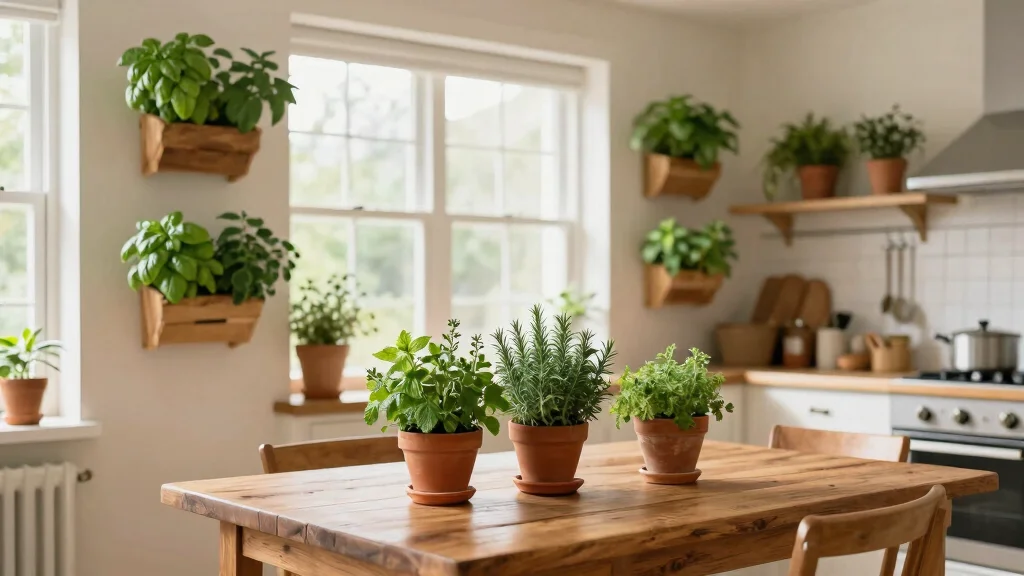
Creating a kitchen herb garden can be a delightful way to combine beauty and practicality in your home. If you’ve ever found yourself daydreaming about fresh basil for your pasta or a sprig of mint for your mojito, you’re not alone. This post aims to inspire you with 12 stunning kitchen herb garden ideas that not only make your space look pretty but also serve up culinary delights right at your fingertips.
Whether you’re an avid cook or just getting started, this guide is perfect for anyone looking to grow their own culinary herbs. If you love experimenting with flavors or simply want to add a touch of green to your kitchen, you’ll find these ideas engaging. Each concept is designed with small spaces in mind, making it easier for you to incorporate a garden into your home, regardless of its size.
In this blog post, you’ll discover creative designs that are both charming and functional. From vertical wall planters to tiered herb stands, we’ve gathered options that fit beautifully into any kitchen. With each idea, you’ll find practical tips and inspiration to create your own herb oasis. Let’s dive into these kitchen herb garden ideas and explore how you can enjoy fresh flavors every day.
Key Takeaways
– Vertical Wall Planters are perfect for maximizing small spaces while adding a touch of greenery to your walls. They can be customized to fit any aesthetic, bringing life to bare surfaces.
– Hanging Herb Baskets save counter space and create a charming look. They can be placed near windows or hanging from ceiling hooks for easy access.
– Tiered Herb Stands allow you to showcase multiple herbs at different heights, creating an eye-catching display while ensuring each plant receives adequate sunlight.
– Magnetic Spice Jars with Herbs can be a unique and modern way to store and display your herbs, adding convenience to your culinary adventures.
– Hydroponic Herb Gardens allow you to grow herbs without soil, making them an excellent choice for indoor gardening enthusiasts. They also require less maintenance, offering a hassle-free growing experience.
1. Vertical Wall Planters
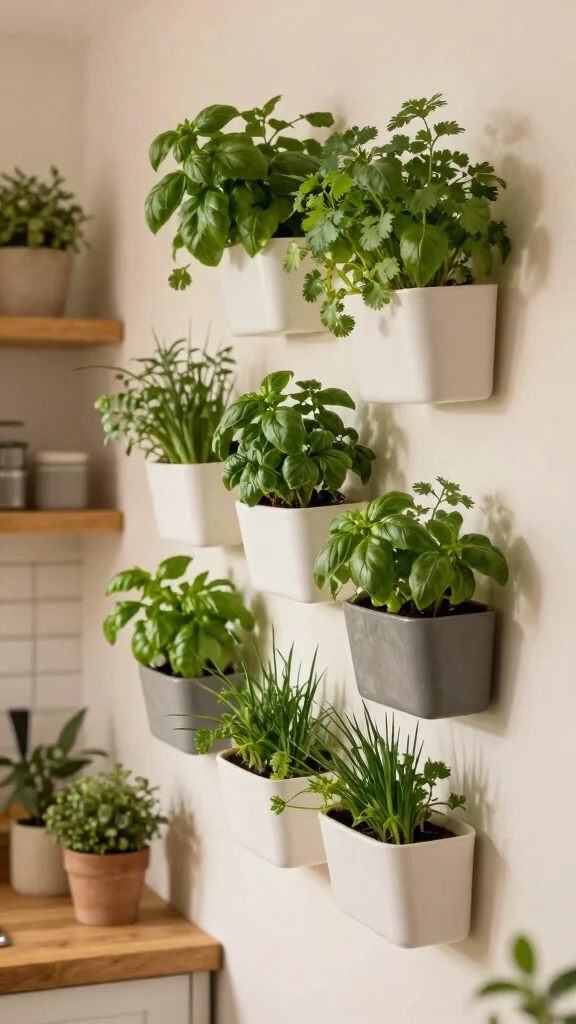
Are you short on kitchen space but still want to grow fresh herbs? Vertical wall planters are a chic solution for creating a mini herb garden, even in the tiniest areas. You can arrange these planters creatively, adding visual interest while keeping your herbs at arm’s reach.
Using breathable materials for your wall planters ensures proper airflow and moisture, which is vital for healthy growth. Mixing herbs such as mint, cilantro, and chives not only enhances the flavor of your dishes but also adds a splash of color to your kitchen. Hanging them at eye level makes it convenient for snipping while you cook.
Choose companion herbs like basil and parsley for easy care, and consider repurposing materials like old wooden pallets or shoe organizers for an eco-friendly touch. This way, you can showcase your personal style while being kind to the planet.
2. Hanging Herb Baskets
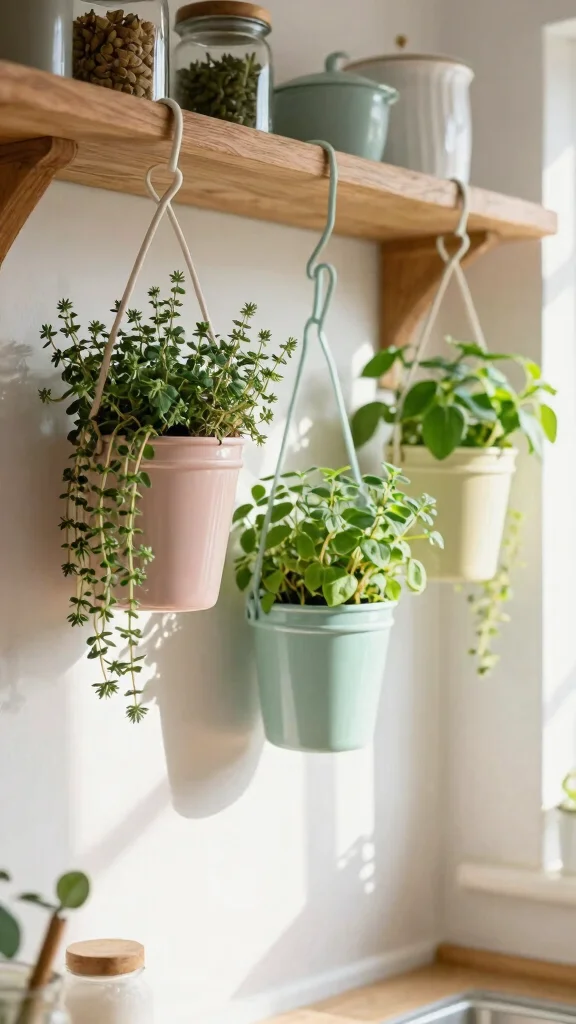
Looking for a stylish way to add greenery without sacrificing counter space? Hanging herb baskets are perfect for bringing nature indoors. Hang them by a sunny window or from a kitchen light fixture, and watch your herbs flourish.
Opt for woven or wire baskets to achieve that rustic vibe, and choose trailing herbs like thyme or oregano for a beautiful cascading effect. Not only do they look fantastic, but they also provide easy access for fresh herbs when you’re cooking.
Use lightweight soil that retains moisture while allowing for drainage, ensuring your plants thrive. Group multiple baskets together for a vibrant display, or mix in flowering plants for added color. For a personal touch, paint your baskets in pastel shades that complement your kitchen décor.
3. Tiered Herb Stands
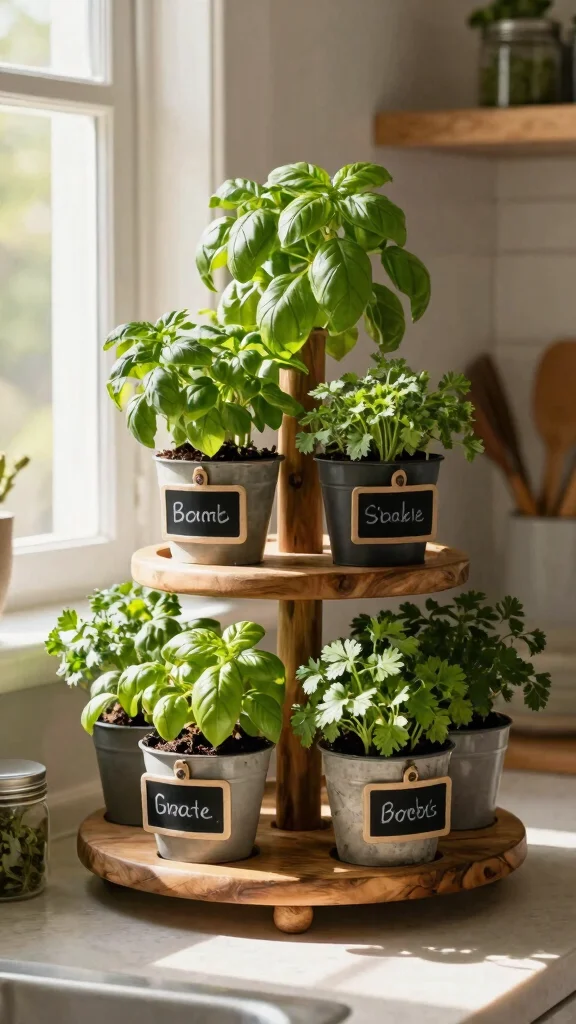
Want to create a stunning focal point on your countertop? A tiered herb stand is the way to go! These stands hold multiple pots at varying heights, showcasing your herbs beautifully.
They optimize space and make your herbs easily accessible, perfect for those who love to cook. Position your stand in a spot with direct sunlight for happy, thriving plants. You can choose from wood, metal, or other materials to fit your kitchen style.
Label each pot with cute chalkboard tags for an organized and charming look. Pair herbs like basil, cilantro, and parsley together for a practical and flavorful collection, ideal for everyday cooking.
4. Magnetic Spice Jars with Herbs
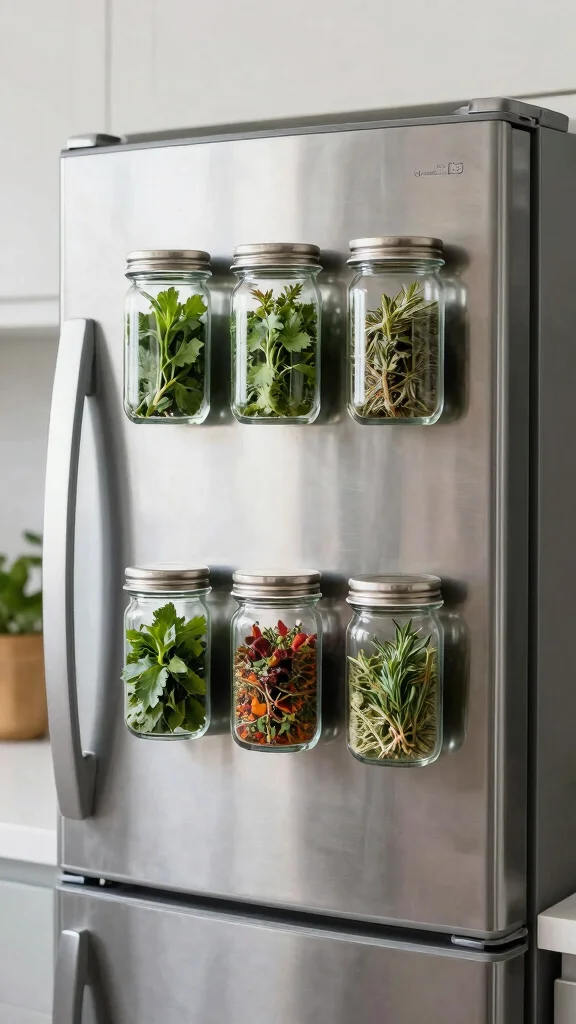
Want a modern twist on herb storage? Magnetic spice jars are a clever way to keep your favorite herbs close while saving valuable counter space. Attach them to your fridge or a magnetic board for easy access.
These jars not only save space but also elevate your kitchen décor. Fill them with fresh or dried herbs, and use clear jars to showcase vibrant greens.
Consider using clear labels for quick identification of your herbs without needing to open each jar. This stylish solution is especially great for small kitchens, keeping everything organized and visually appealing. Just remember to seal the jars properly to maintain freshness!
5. Colorful Ceramic Pots
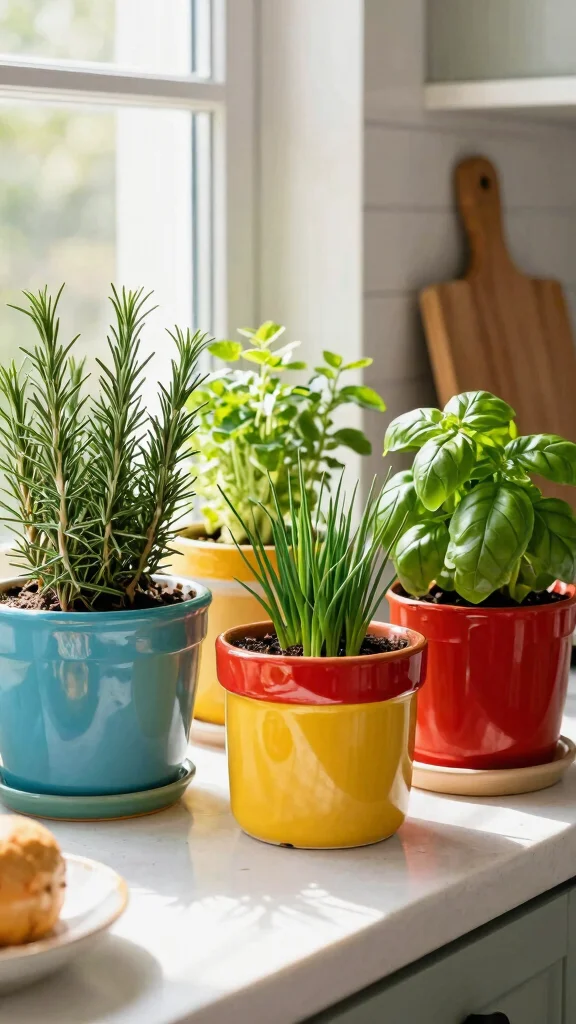
Ready to brighten up your kitchen? Colorful ceramic pots are an excellent way to grow herbs while adding a fun pop of color. Place them on windowsills, countertops, or even as part of a table centerpiece.
Ceramic pots come in a wide range of colors and designs, allowing you to express your personality and complement your kitchen décor. They also help regulate moisture levels, promoting healthy plants.
Mix different shapes and sizes for an eclectic look, or choose matching sets for a more cohesive vibe. Pairing herbs like rosemary, chives, and basil not only brings flavor to your meals but also creates a visually delightful arrangement.
Fun fact: Colorful ceramic pots aren’t just pretty—they can cut overwatering by up to 30%, perfect for boosting kitchen herb garden ideas. When you mix shapes and sizes, herbs stay happier on sunny windowsills, and the moisture stays balanced thanks to smart drainage.
How To Choose the Right Indoor Herb Garden
Choosing the perfect indoor herb garden can be both exciting and overwhelming. With so many options out there, it’s important to focus on your specific needs and space. Here are some key factors to consider:
1. Size
Think about the space you have available for your herb garden. Are you limited to a small windowsill, or do you have more room to work with? Measure the area where you plan to place your garden. A smaller space might call for vertical solutions, like wall planters or tiered stands, while larger areas can accommodate wider containers or hydroponic systems.
2. Type of Herbs
Consider which culinary herbs you’ll use most often. Common options include basil, parsley, cilantro, and thyme. Some herbs grow better indoors than others, so do a little research on their specific needs. For instance, basil thrives in bright light, while mint can tolerate lower light conditions. Choose herbs that fit your cooking style and your home’s environment.
3. Growing Method
Decide how you want to grow your herbs: soil or hydroponically. Soil is traditional and easy to manage, but hydroponics can offer faster growth rates and often requires less space. If you choose hydroponics, look for self-watering containers or kits that simplify the process. Each method has its benefits, so choose one that aligns with your gardening preferences.
4. Container Material
The material of your containers can impact your herb garden’s success. Common materials include ceramic, terracotta, and plastic. Ceramic pots are visually appealing but can be heavy and prone to cracking. Plastic pots are lightweight and often come with drainage holes but may not have the same aesthetic appeal. Choose a material that suits your style and practical needs.
5. Light Requirements
Herbs need adequate light to thrive. Most culinary herbs require about 6-8 hours of sunlight per day. If your space lacks natural light, consider grow lights. These lights can mimic sunlight and help your herbs grow strong and healthy. Make sure to position your herbs where they can absorb as much light as possible.
6. Budget
Finally, set a budget for your herb garden. Indoor gardening can range from inexpensive DIY projects to more elaborate setups. Determine how much you’re willing to spend on containers, soil, seeds, or starter plants. Remember to consider the long-term investment in tools, lighting, and potential replacements.
Pro Tip: Start small! A few pots with your favorite herbs can help you learn and grow your gardening skills without feeling overwhelmed. Once you’re comfortable, you can expand your indoor herb garden and experiment with new herbs and growing methods. Happy gardening! 🌱
6. Recycled Containers
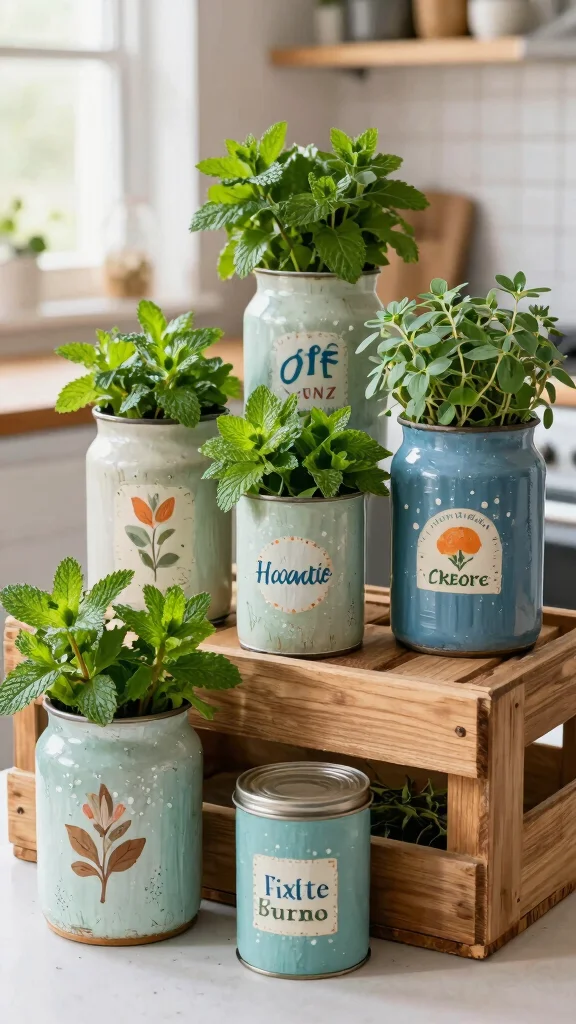
Are you an eco-conscious gardener? Using recycled containers for your herb garden is a creative and budget-friendly choice. Old jars, cans, or wooden crates can be transformed into charming planters.
Upcycling reduces waste and gives your herbs a unique home. Just make sure to drill drainage holes if your containers are solid. You can paint them or wrap them in twine for added style.
This approach allows for experimentation with various sizes and shapes, giving your kitchen a personal touch. Popular herbs like mint and oregano thrive in these containers, and a collection of assorted recycled pots creates a warm, inviting atmosphere.
7. Hydroponic Herb Garden
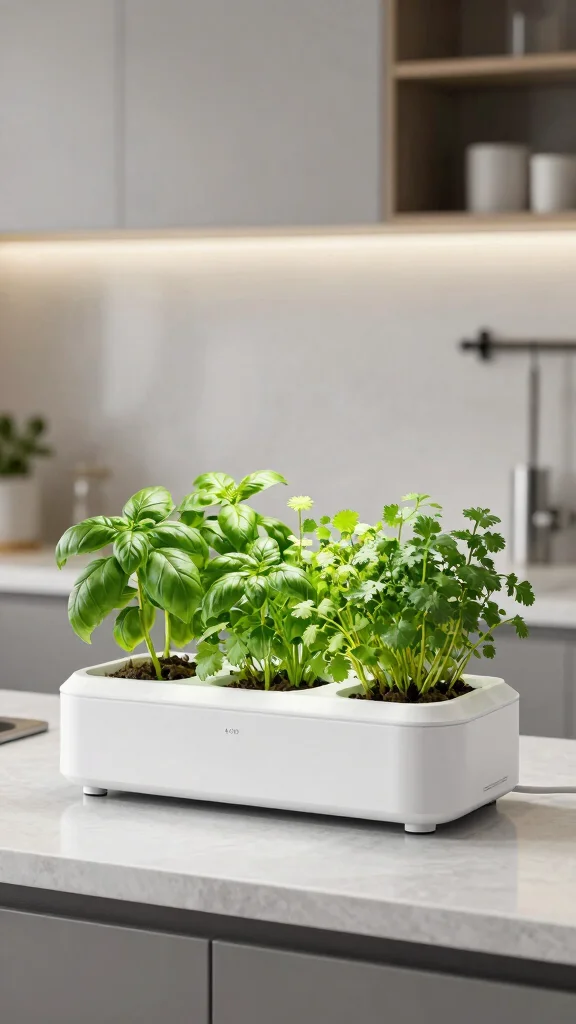
Are you interested in modern gardening techniques? A hydroponic herb garden can be an exciting addition to your kitchen. This soil-free method lets herbs grow in nutrient-rich water, ensuring faster growth and efficiency.
Hydroponic systems take up minimal space and allow you to cultivate your favorite herbs year-round. They come in various designs, from countertop setups to wall-mounted systems.
Herbs like basil, mint, and cilantro thrive in hydroponic environments, providing fresh flavors right at your fingertips. Plus, they require less maintenance than traditional gardening, making them perfect for busy lifestyles. Just keep an eye on nutrient levels to keep your herbs flourishing!
8. Windowsill Herb Garden
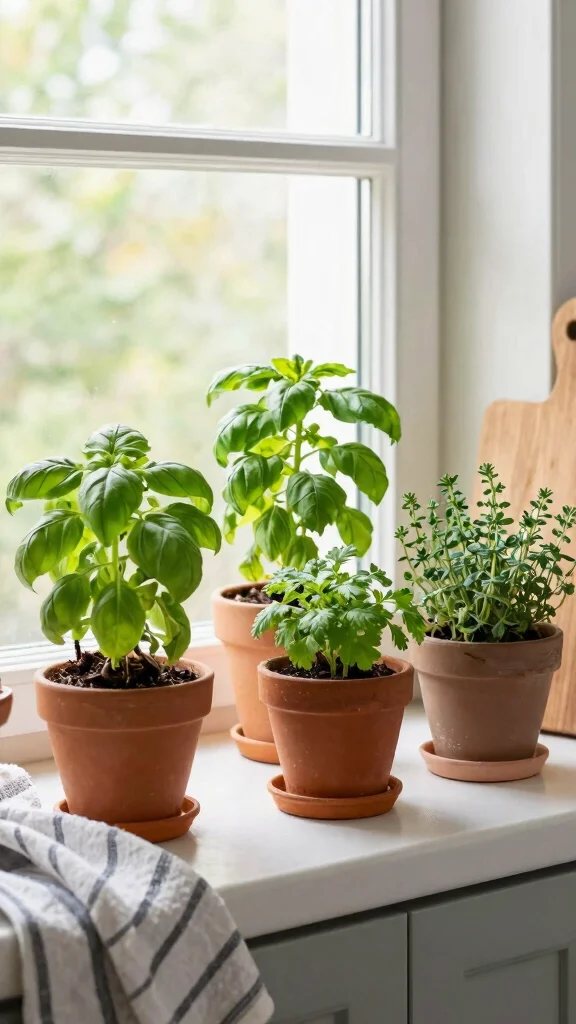
Do you have a sunny windowsill? It’s one of the best spots for a simple and effective herb garden. This location typically receives ample sunlight, great for herbs like basil, parsley, and thyme.
Best of all, it’s easily accessible for snipping fresh herbs as you cook! Use small pots or an elongated planter to group multiple herbs together.
A windowsill herb garden adds a lush, vibrant view to your kitchen, bringing a touch of nature indoors. Rotate your herbs regularly to ensure even growth, and consider organizing them by height or color for visual appeal. Adding decorative trays or plant stands can enhance the overall look too.
9. Herb Wall Art
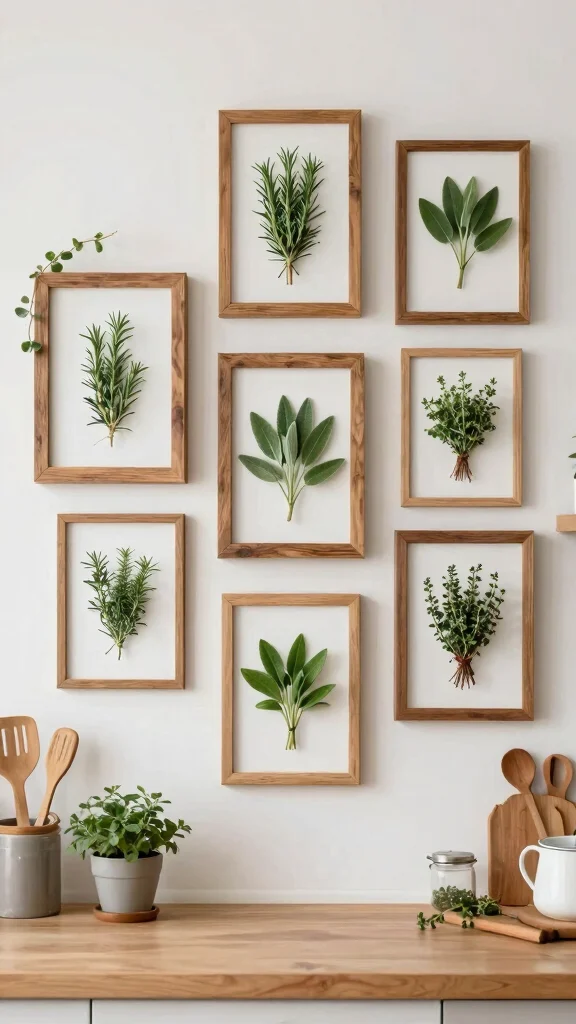
Looking to enhance your kitchen’s aesthetics? Create herb wall art for a fun and unique way to display your herbs. By using frames or wooden boards, you can secure small bunches of herbs, turning them into beautiful decor.
This project combines your passion for cooking with home design while keeping your herbs fresh and vibrant. Change out the herbs seasonally for a refreshing update, using edible varieties like rosemary, sage, and thyme that add both beauty and flavor.
Hang your herb art near your cooking area for a creative inspiration boost, and it becomes a fantastic conversation starter when entertaining guests. Just make sure to keep the herbs hydrated for lasting freshness.
10. Herb Garden on a Ladder
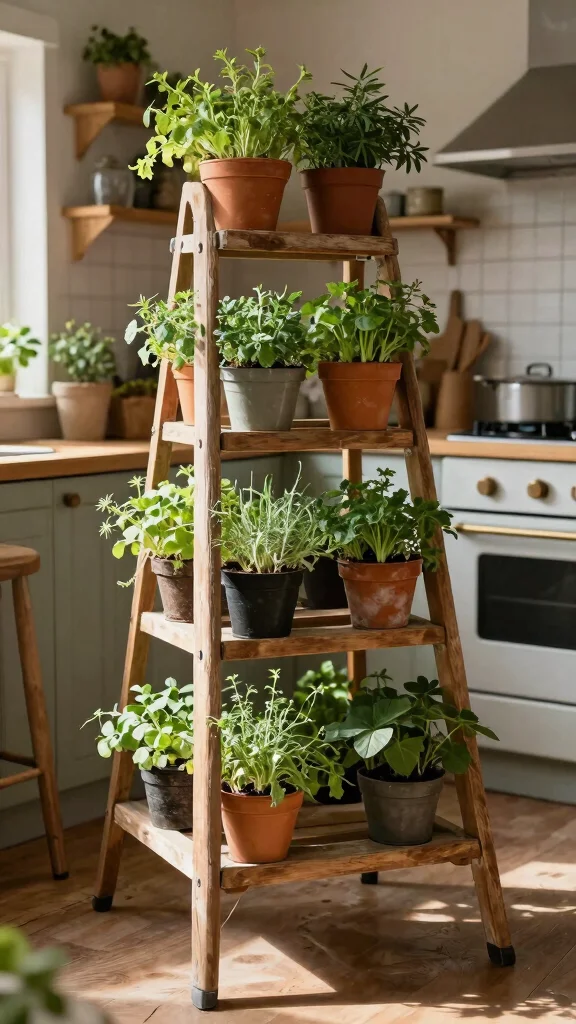
Need a quirky and stylish way to display your herbs? An old ladder can serve as a charming herb stand! Lean it against a wall or place it in a sunny corner of your kitchen for a unique touch.
This setup creates an eye-catching focal point while providing ample space for various herb pots at different levels. You can paint the ladder to match your kitchen décor or leave it rustic for a farmhouse charm.
Arrange your herbs by size, placing taller options like dill at the top and smaller herbs like thyme at the bottom. This not only saves counter space but adds a chic flair to your kitchen. Just ensure the ladder is secure to prevent any accidents while reaching for your herbs!
11. Herb Terrarium
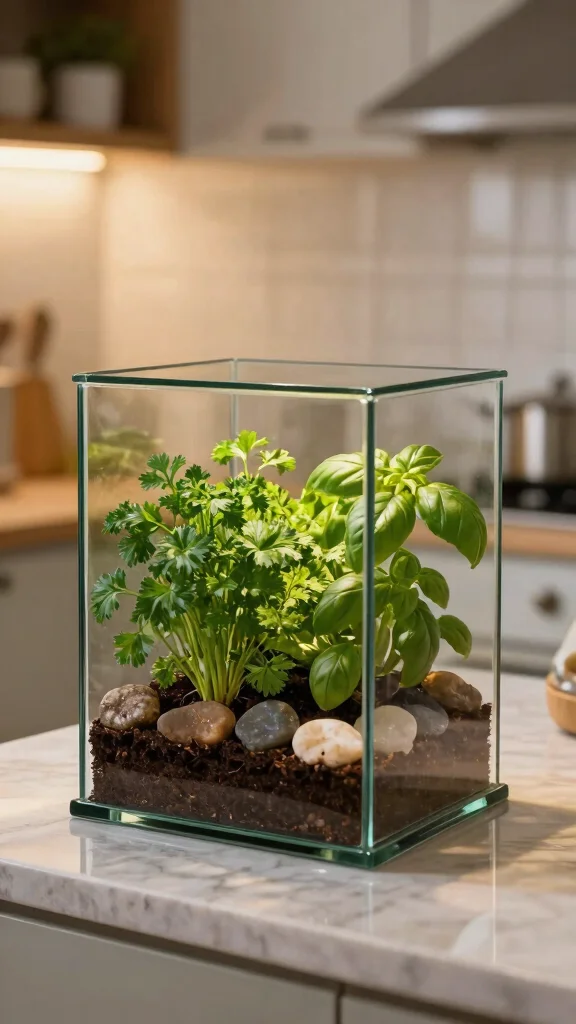
Want to add a whimsical touch to your kitchen? A herb terrarium is a beautiful way to grow herbs while showcasing their beauty. These glass containers create a mini environment that promotes both aesthetics and culinary benefits.
Terrariums provide humidity and protection from pests, creating a perfect microclimate for herbs like parsley and basil. Choose a clear glass container that fits your kitchen style, and layer gravel, activated charcoal, and potting soil for a healthy environment.
Terrariums serve as stunning centerpieces on your kitchen table or countertops. They’re low-maintenance and can be a fun project to tackle with family or friends. Just remember to give your herbs enough light to thrive!
Fun fact: A glass herb terrarium can boost humidity in your kitchen by up to 40%, giving parsley and basil a happier microclimate. This twist on kitchen herb garden ideas uses a simple layered setup—gravel, charcoal, and soil—so you water less and harvest more.
12. Culinary Herb Garden Kit
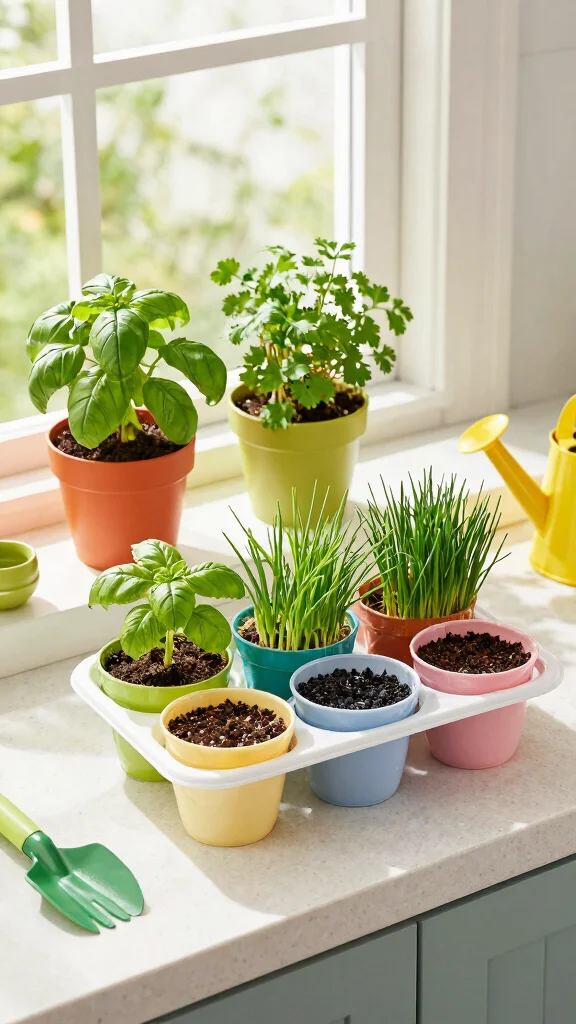
Are you new to gardening and looking for an easy way to start? A culinary herb garden kit is a fantastic choice for beginners. These kits typically include seeds, pots, and soil, making it simple to cultivate your kitchen herbs.
Kits simplify the process by providing everything you need in one package, perfect for those with limited gardening experience. Look for kits that feature popular herbs like basil, chives, and cilantro, which are staples in many recipes.
Set up your kit on a sunny windowsill or countertop to beautify your kitchen while providing fresh herbs at your fingertips. Many kits also come with instructions to help you care for your plants, making it a fun family activity to introduce kids to gardening!
Kitchen herb garden ideas start simple: a culinary herb garden kit can cut grocery trips by a third. These kits include seeds, pots, and soil, making it easy for beginners to grow basil, chives, and cilantro right on the kitchen counter.
Conclusion
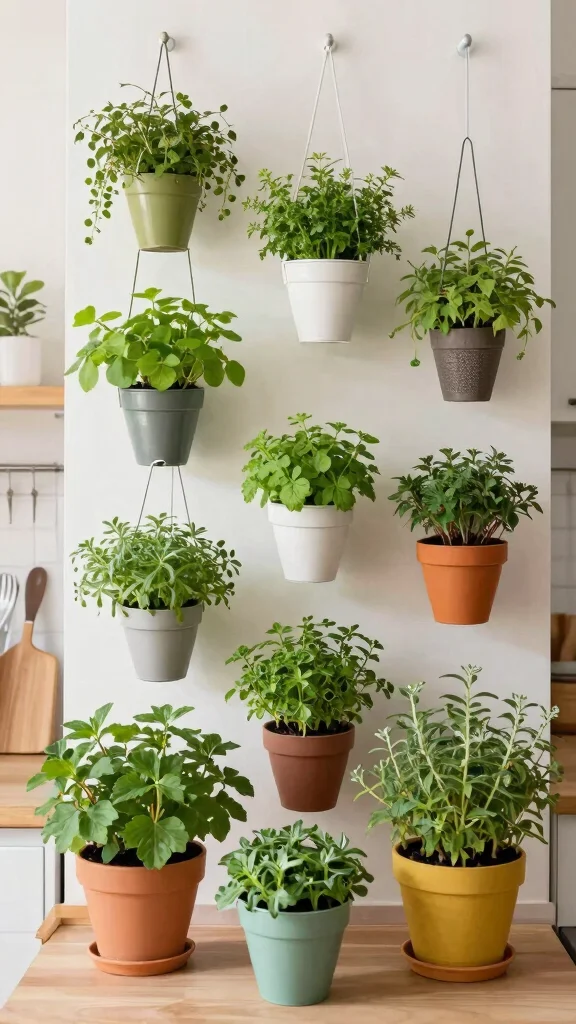
Cultivating a kitchen herb garden is not only a practical solution for adding fresh flavors to your cooking but also enhances the beauty of your kitchen space.
Whether you opt for vertical gardening, hanging baskets, or creative containers, the possibilities are endless.
So, gather your favorite culinary herbs and get started on your own garden—your dishes (and your kitchen) will thank you for it!
Note: We aim to provide accurate product links, but some may occasionally expire or become unavailable. If this happens, please search directly on Amazon for the product or a suitable alternative.
This post contains Amazon affiliate links, meaning we may earn a small commission if you purchase through our links, at no extra cost to you.
Frequently Asked Questions
What are the best vertical kitchen herb garden ideas for small spaces?
Vertical solutions can transform a tiny kitchen into a fragrant, productive space. Try wall-mounted pocket planters, a hanging herb garland, a repurposed wooden pallet with pots, magnetic strips or tins on a rail, or a compact hydroponic tower to maximize growing area.
Choose a sunny spot for indoor herb gardening and select herbs you cook with often, like culinary herbs such as basil, chives, and thyme. Ensure each container has drainage and group plants with similar light and water needs. Label pots and use a shallow tray to catch drips so your container gardening ideas stay neat.
With a little planning, a vertical setup makes kitchen herb garden ideas both pretty and practical.
How can I design an indoor herb garden that is both pretty and practical?
Design starts with a plan. Create a cohesive look by choosing a color palette and mixing materials (terracotta, metal, wood) in your vertical setup. Use varying pot sizes on a slim shelf or wall rack to create levels that are easy to harvest. Place near your cooking area for indoor herb gardening convenience, and add a small grow light if natural light is limited. Group herbs by sun needs and harvest frequency, for example, basil and oregano in bright spots, parsley and chives in moderate light. This herb garden design keeps your culinary herbs accessible and your kitchen looking stylish.
Which culinary herbs are best for container and vertical setups?
Great options include culinary herbs like basil for fast, flavorful growth, flat-leaf parsley, chives, thyme, oregano, and mint (keep mint in a dedicated pot to prevent spreading). Cilantro can work indoors with bright light and steady moisture, though it may bolt in heat. Group herbs with similar light and water needs on your container gardening ideas plan and choose compact or dwarf varieties when space is tight. Regular pruning helps keep them bushy and productive for indoor herb gardening.
What containers or materials work best for a vertical kitchen herb garden?
Choose options that fit your space and style: wall-mounted fabric pockets, a tiered metal rack, railing planters on a kitchen rail, or a repurposed shoe organizer turned into individual herb pockets. You can also stack small pots on a slim shelf or use a compact hydroponic column. Whatever you pick, ensure each container has drainage holes and sits on a tray to catch water. For small space gardening, lightweight materials and clean lines keep things tidy and accessible for container gardening ideas.
How can I maintain an indoor kitchen herb garden year-round with minimal effort?
Placement matters: choose the brightest window possible or supplement with a full-spectrum grow light. Water when the top inch of soil dries, or use self-watering planters or a moisture meter for a hands-off approach. Fertilize monthly with a diluted balanced fertilizer to sustain growth. Prune regularly to encourage bushy plants and frequent harvests, and rotate herbs so you don’t overwhelm any single plant. Keep pests at bay with simple wipes or organic sprays if needed. This approach keeps your indoor herb gardening thriving year-round with minimal fuss.
Related Topics
kitchen herb garden
vertical gardening
indoor herbs
small space gardening
container gardening
culinary herbs
easy gardening
beginner friendly
decorative planters
urban gardening
herb garden design
practical gardening